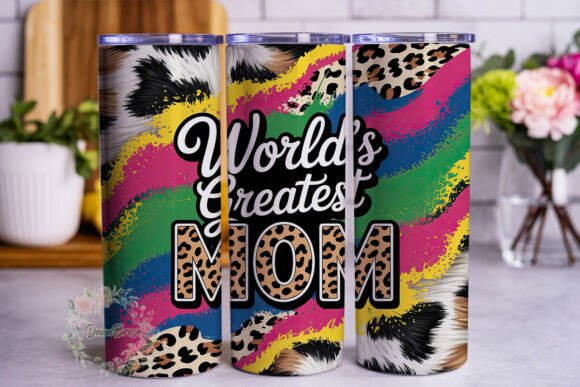
World s Greatest Mom Tumbler Wrap Design Review
When a new design lands on my desk, I don't look at it through the lens of a catalog listing. I look at it the way a maker does. I ask myself: would I stitch this onto something I'd hand to a customer? Would I trust it on a product that carries my small shop's name? The World s Greatest Mom Tumbler Wrap design arrived as a clean pair of high-resolution PNG files, and I spent a good hour turning it over in my mind before I even opened my embroidery software.
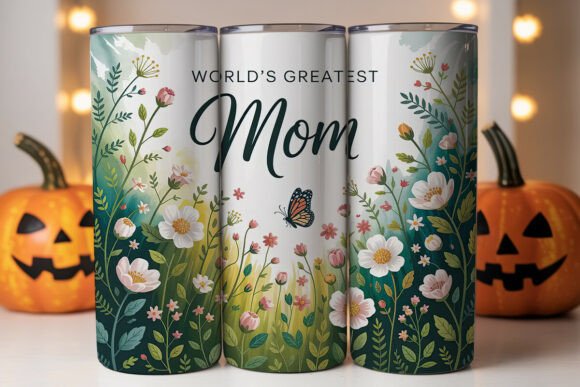
What caught my eye first was the sentiment. Mother's Day designs can veer into cliché territory fast, but this one holds a gentle confidence. The layout feels balanced, the typography reads clearly, and the overall shape suggests a design that was built with real product dimensions in mind. That matters more than most people realize. A design that looks beautiful on a screen can fall apart the moment it meets a curved tumbler surface or a textured fabric background. The fact that this comes in both straight and tapered versions tells me the creator understood the assignment.
First Impressions of the Design and Its Mood
Opening the ZIP file, I found exactly what the description promised: one straight layout at 9.3 by 8.2 inches, one tapered at the same dimensions, both at 300 DPI. The resolution is crisp. No fuzzy edges, no awkward compression artifacts. For a machine embroidery design workflow, clean source artwork is non-negotiable. Even if this is a printable graphic first, the clarity of the lines makes it viable for digitizing if you have the right software and skills.
The mood of the World s Greatest Mom Tumbler Wrap is warm without being saccharine. It strikes a tone that would resonate with someone buying a gift for their mother, a grandmother, or a maternal figure. The visual personality feels versatile, which is something I always look for when I'm planning a handmade product line. A design that only works for one specific occasion limits your inventory. This one could live on a Mother's Day tumbler, sure, but it could also sit beautifully on a birthday gift, a just-because present, or a boutique product aimed at the "proud mom" customer segment.
Where This Design Shines in Real Embroidery Work
Now, let's talk about the practical side. I work with embroidery file conversions regularly, and I've learned that not every printable graphic translates well to thread. The World s Greatest Mom Tumbler Wrap has characteristics that make it a strong candidate for adaptation. The lettering is substantial enough to hold up as a satin stitch or a well-digitized fill stitch. The design doesn't rely on ultra-thin hairlines that would disappear under thread tension. That's a real consideration when you're staring at a 4x4 hoop and trying to decide if a design will actually stitch out cleanly.
For custom apparel, I can see this working on the back of a denim jacket, across the chest of a sweatshirt, or positioned on a tote bag design panel. The proportions at 9.3 inches wide are generous for larger hoop setups. If you're running a multi-needle machine with a hoop that can handle that width, you're in good shape. For smaller hoops, you'd need to scale down carefully and check stitch density after digitizing. Small lettering is where many designs lose their readability, so I'd recommend testing a scaled version on scrap fabric before committing to a final product.
One of my favorite use cases for this design is personalized gift production. I've run a small craft business long enough to know that mom-themed products sell consistently, not just in May but year-round. A customer looking for an embroidered patch or a custom pillow cover with this sentiment would feel the emotional weight of the words. The design doesn't scream for attention, and that's a good thing. It lets the message do the work.
Fabric and Surface Considerations That Matter
Here's where experience kicks in. The World s Greatest Mom Tumbler Wrap graphic is sized for tumblers, but if you're an embroidery artist thinking about adapting it for fabric, you need to think about the surface. A sweatshirt embroidery project with this design would require a sturdy stabilizer, especially if the fabric has any stretch. The wider the design, the more crucial hoop size and stabilization become. I've ruined enough test pieces to know that skipping the stabilizer test is a mistake you only make once.
On textured fabric like a waffle-knit kitchen towel or a looped terry cloth, the lettering could lose definition. I'd recommend a water-soluble topper to keep the stitches from sinking into the texture. For dark fabric, thread color contrast becomes essential. A design that looks crisp on a white mockup can turn muddy on black cotton if the thread colors aren't chosen carefully. I always test my digitized versions in a black-and-white preview first to check contrast before picking final thread spools.
Products that need frequent washing, like baby embroidery items or kitchen linens, deserve extra attention. If you're stitching this design onto a bib, a onesie, or a tea towel, make sure the stitch density isn't so heavy that the fabric puckers after the third wash cycle. Dense fill stitches on thin cotton can be a recipe for disappointment. I've learned to dial back the density slightly on thin fabric and to always, always wash-test a sample before listing anything in my shop.
How the Design Affects Product Value and Customer Perception
When a customer picks up a finished product with this design, they're not analyzing DPI or hoop sizes. They're reacting to how it makes them feel. The World s Greatest Mom Tumbler Wrap carries a sentiment that lands with genuine warmth. That emotional connection is what turns a browsing visitor into a buyer. For Etsy seller shops and craft business owners, the right design can elevate a simple product into something that feels intentional and gift-worthy.
I've noticed that mom-themed products with clean, readable typography tend to perform better in printable mockup previews and listing photos. The design photographs well, which is a practical advantage when you're staging product shots for an online store. The lettering holds its own without needing excessive decorative elements. That kind of visual confidence builds customer trust. When someone buys a handmade product with this design, they're not going to squint and wonder what it says. The message is immediate.
For small shop merchandise, consistency matters. If your brand leans toward heartfelt, family-oriented designs, this fits right in. It doesn't clash with a rustic aesthetic or a modern minimalist look. The versatility of the design means you can use it across multiple product types without it feeling out of place. A boutique product line that includes a tumbler, a matching tote, and a coordinating pillow cover would feel cohesive with this design tying the collection together.
Practical Designer Notes Before You Stitch or Sell
Let me share some honest advice from someone who has made plenty of mistakes along the way. First, always test the design on scrap fabric. I don't care how good it looks on your screen. Thread behaves differently than pixels, and your machine's tension settings will affect the final result. What looks perfectly balanced in a digital preview can shift slightly once it's stitched onto a curved surface like a cap or a tumbler.
Second, check the hoop size compatibility before you commit to a project. The original graphic dimensions are 9.3 by 8.2 inches, which is substantial. If you're digitizing for embroidery, you'll need to confirm that your machine can handle that size or scale it down appropriately. Scaling down too much could make small details unreadable. I've been burned by that before, especially with designs that have tiny lettering or delicate decorative accents.
Third, think about stabilizer choice. For a design this size on a stretchy fabric, a cut-away stabilizer is your friend. Tear-away might work for woven cotton, but anything with give needs more support. I've also found that layered garments like hoodies require extra attention around seams and pockets. The design placement needs to account for those structural elements so the embroidery doesn't land awkwardly.
Fourth, review the licensing before you sell finished products. The description mentions this is a digital embroidery file listing, so make sure you understand whether commercial embroidery use is permitted. If you're planning to sell finished product items at craft fairs, on Etsy, or through your own website, you need clarity on usage rights. I always keep a folder of license confirmations for every design I use in my shop. It's not the most exciting part of the job, but it protects your business.
Where I'd Use This Design and Where I'd Pause
If I were planning my production schedule around the World s Greatest Mom Tumbler Wrap, here's where I'd put it: on a high-quality canvas tote, on the front of a cozy crewneck sweatshirt, on a linen pillow cover, and on a simple apron. Those surfaces give the design room to breathe and let the typography take center stage. For holiday embroidery gift sets, I'd pair it with a matching tumbler and a small embroidered patch on a coordinating tea towel.
Where would I be cautious? On caps and hats with a steep curved profile, the design's width might make placement tricky. I'd test a scaled version on a structured cap and check for distortion along the curve. On baby clothes with tiny dimensions, the full design wouldn't fit, so a scaled-down version would need careful digitizing to preserve readability. And on dark fabric with dark thread, the contrast could suffer. I'd stick to light or bright thread colors on darker backgrounds to keep the design legible.
For craft fair products, I think this design would draw attention because the message is universal. Shoppers who are looking for a gift for their mom don't need a long explanation. They see the words, they feel the sentiment, and they reach for their wallet. That's the kind of buyer engagement you want from a design asset.
Final Thoughts on the Design's Place in a Maker's Toolkit
The World s Greatest Mom Tumbler Wrap belongs in the toolkit of a maker who understands that simple, heartfelt designs often outperform complicated ones. It's not flashy, and that's exactly why it works. The dual format with straight and tapered versions shows thoughtful preparation, and the high-resolution files give you flexibility whether you're working on design assets for sublimation or converting the artwork for machine embroidery design projects.
As someone who reviews products through the lens of actual production work, I appreciate when a design doesn't overpromise and underdeliver. This one gives you exactly what the description states, and the quality holds up under scrutiny. If you're an embroidery designer, a small business owner, or a creative entrepreneur looking for a reliable mom-themed design that can span multiple product categories, this is worth your attention. Just remember to test it on your specific materials, confirm your hoop size, choose your thread colors with intention, and always check your licensing before you sell. Those habits separate a professional maker from a hobbyist, and they're the reason your customers will keep coming back.