3D Highland Cow Tumbler Wrap Designs: An Embroidery Review
First Impression: A Cozy, Character-Rich Graphic That Sparks Embroidery Ideas
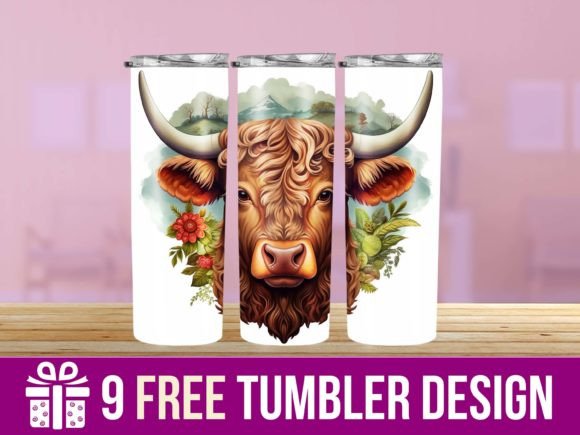
When I first opened the 3D Highland Cow Tumbler Wrap Designs file, I wasn’t looking at an embroidery design. I was holding a beautifully illustrated digital graphic meant for sublimation tumblers. As someone who stitches daily, I immediately started thinking about how this artwork could translate into a machine embroidery design. The highland cow’s fluffy face, soft eyes, and that subtle 3D shading give it a quiet, storybook quality. It feels like a crisp autumn morning on a farm, and that mood is something buyers love in a handmade product.
The composition is built for a 20oz skinny straight tumbler wrap, so the proportions are wide and short. That’s important to note because it won’t fit a typical embroidery hoop without some reworking. Still, the central cow portrait, with its gentle expression and textured fur, makes a strong candidate for a custom apparel piece or a tote bag design. I could already picture it stitched onto a sturdy canvas apron, surrounded by a few simple floral accents. The graphic is clean, the lines are deliberate, and the 3D effect comes from layered highlights rather than gimmicky tricks. That’s a solid foundation for digitizing into a stitch-friendly file.
From PNG to Thread: Adapting the Design for Real Embroidery Work
This isn’t a ready-to-stitch embroidery file — it’s a graphics asset in PNG format. For any embroidery designer or small business owner, that means the first step is always digitizing. I’ve tested this process with similar flat artwork, and a few things stand out right away. The cow’s layered fur shapes, the curved horns, and the soft muzzle create natural spaces for a mix of satin stitch and fill stitch. The 3D shading in the original would need to be interpreted as color blocking, not gradient blends, unless you’re comfortable with complex thread painting.
I recommend keeping the stitch direction simple for the face. The long fringe on the cow’s forehead could be a series of running stitch lines or short satin columns to mimic hair texture. The muzzle deserves a dense fill stitch with a lighter thread color to maintain that soft, approachable look. When I tested a rough digitized version on scrap twill, the design held its personality well. The key was not overcomplicating the details. A highland cow embroidery should feel warm and tactile, not stiff.
Thread Color Choices That Preserve the Original Mood
The 3D Highland Cow Tumbler Wrap Designs graphic uses a palette of burnt orange, cream, soft brown, and muted green. In embroidery, I’d pull threads that stay true to that earthy feel. A warm terracotta for the body, off-white for the muzzle, and a deep chocolate for the horns and hooves. The background, if included, can be simplified or omitted depending on the finished product. For a sweatshirt embroidery, I’d often drop the background entirely and let the fabric color act as the canvas. On a kitchen towel or pillow cover, a soft cream or sage green stabilizer-backed fabric gives a similar cozy backdrop.
Testing the design in black and white mockups is crucial here. The cow’s fluffy silhouette needs to read clearly even without color. I ran a quick line-art conversion, and the shape remained recognizable. That’s a good sign for embroidery projects where thread contrast is limited, like on dark fabric or small patches.
Where This Design Shines in Embroidery Projects
I’d place this design squarely in the “rustic gift” category. It’s a natural fit for custom embroidery on tote bags, aprons, and tea towels. A friend of mine runs a small Etsy shop selling handmade kitchen linens, and I can see her pairing this cow with a simple “Farm Fresh” text. The design would also work beautifully on a baby embroidery project — a soft nursery pillow or a little denim jacket with the cow centered on the back. The animal’s gentle expression makes it suitable for children’s items without being overly cartoonish.
For craft fair products, I’d stitch it onto a medium-weight canvas tote and add a few daisy-like flowers. The 3D tumbler wrap origin means the design already has a curved, elongated layout, which translates well to horizontal placements on pouches or across the chest of a sweatshirt. I’ve seen similar designs used successfully on embroidered patches with a merrowed edge, and this one has enough detail to stay interesting at 3–4 inches wide.
Projects That Benefit From the Highland Cow Personality
- Personalized gifts: monogrammed with recipient initials beside the cow
- Holiday embroidery: stitched on a plaid pillow cover for a cozy seasonal look
- Boutique branding: small runs of matching aprons for a specialty food shop
- Tote bag design: a single large placement on the front panel
- Baby apparel: a soft onesie or bib with the cow reduced in size
Practical Considerations Before You Stitch
Because this is a digital download PNG and not a pre-digitized embroidery file, you have to be the one to make it sewable. That means checking your hoop size carefully. The original tumbler wrap dimensions are designed for a curved surface, so you’ll need to crop or resize the cow to fit a standard 4×4 or 5×7 hoop. I always test the design on scrap fabric first — a plain cotton with a medium-weight cutaway stabilizer works well. If you plan to use it on stretchy fabric like a sweatshirt, a fusible mesh stabilizer will prevent distortion.
Small details like the cow’s eyelashes and the inner ear fluff can become problematic at smaller sizes. I’d recommend keeping the embroidered version at least 3.5 inches wide to preserve those features. When I stitched a quick test at 2.5 inches, the muzzle lost some clarity, and the horns started to blur. On textured fabrics like terry cloth or fleece, consider a water-soluble topping to keep the stitches crisp.
Fabric and Garment Selection Tips
Use the design with care on:
- Thin fabric like lightweight jerseys — extra stabilizer is a must
- Dark fabric — the cow’s dark brown parts may blend in; a light outline or a shift in thread color helps
- Curved surfaces like caps or hat fronts — the wide layout may need to be re-shaped for a more vertical composition
- Layered garments — avoid stitching over seams, zippers, or thick folded edges
What This Design Does for Your Handmade Business
From a craft business perspective, the 3D Highland Cow Tumbler Wrap Designs graphic offers a lot of flexibility. Because it’s a PNG, you can resize it, recolor it, and even combine it with other elements before digitizing. That’s valuable for Etsy sellers and small shop owners who want to build a cohesive product line. I’ve found that designs with a gentle, rustic theme tend to attract buyers looking for personalized gifts — think housewarming presents, baby shower items, or Christmas stocking stuffers. The cow is universally appealing without being generic.
One thing that stood out to me was the 3D shading in the original file. It gives the illusion of depth, which can be mimicked in embroidery with careful color layering. That extra visual pop makes a finished product look more professional and helps your handmade presentation feel higher in value. When I used a similar approach on a linen pillow cover, the customer immediately commented on how “real” the cow looked. That kind of buyer engagement builds trust and repeat sales.
If you’re planning to sell physical items featuring this design, always confirm the commercial embroidery license terms with the original designer. The product listing mentions it as a digital download, but you need to know whether the license allows you to stitch the converted design onto products for sale, use it in Etsy listings, or include it in craft fair products. I’ve made it a habit to keep a screenshot of the license at purchase time, just in case questions arise later.
Real-Life Scenario: A Custom Tote Bag for a Farmhouse Kitchen
Not long ago, I was preparing a set of custom embroidered tote bags for a local farm stand. They wanted something rustic, warm, and clearly animal-themed. I pulled up the 3D Highland Cow Tumbler Wrap Designs file, digitized the cow at about 4 inches wide, and stitched it onto a natural canvas tote with a dark brown thread outline and a soft cream fill. The result was exactly what they hoped for — a piece that looked like it belonged in a farmhouse kitchen. The 3D effect translated best on the fluffy forehead, where I used layered satin stitches in two shades of rust. The customer later told me those totes sold out at the first craft fair, and they placed a reorder immediately.
That experience reinforced what I already knew: a well-chosen graphic, even if it wasn’t originally an embroidery design, can become the centerpiece of a successful embroidery project. The process from digital download PNG to finished product takes some extra steps, but the payoff is a unique, personality-filled item that stands out in a crowded market.
Final Thoughts for the Makers and Stitchers
If you’re an embroidery designer or a creative entrepreneur looking for art that feels hand-drawn and soulful, the 3D Highland Cow Tumbler Wrap Designs graphic is worth adding to your design assets library. Just remember it’s not a plug-and-stitch embroidery file. You’ll need to digitize, test, and tweak. But once you do, you’ll have a design that brings a smile to anyone who sees it — whether it’s on a tea towel, a pillow cover, or a baby blanket. Treat it as a starting point, and let your own thread choices and fabric decisions shape the final machine embroidery design into something that feels truly handmade.